
Tennessee Building Codes for Roofing: Everything Homeowners Need to Know

Building codes might sound boring, but they’re actually your best protection when investing in a new roof. These regulations ensure your roof can withstand Tennessee’s weather, protect your family, and maintain your home’s value. Roofing projects in Tennessee must follow state regulations designed to protect homeowners and ensure safe construction practices, as outlined under Tennessee roofing laws.
But here’s the problem: building codes are complex, vary by location, and change regularly. How do you know if your contractor is following the right standards?
At a Knoxville-based roofing company, navigating Tennessee building codes is part of our daily work. This guide breaks down everything you need to know about roofing codes—without the confusing details.
Why Tennessee Roofing Building Codes Matter
Before diving into specific requirements, let’s understand why these codes exist and how they protect you.
Your Safety Comes First
Building codes establish minimum standards for:
- Wind resistance during severe storms
- Fire protection for your family
- Structural integrity under snow and ice loads
- Water infiltration prevention
Tennessee experiences severe weather including high winds, heavy rain, and occasional tornadoes. Codes ensure your roof stands up to these challenges.
Protecting Your Investment
Code compliance affects:
- Home resale value and buyer confidence
- Insurance coverage and claims processing
- Warranty validity from manufacturers
- Legal liability if problems occur
Non-compliant work can cost thousands to correct later and create serious problems when selling your home.
Legal Requirements You Can't Ignore
Tennessee law requires:
- Permits for most roofing projects
- Licensed contractors for work over $25,000
- Inspections at specific project stages
- Certificate of occupancy for some projects
Skipping these requirements creates legal and financial risks that far outweigh any short-term savings.
Understanding the International Residential Code (IRC)
Tennessee adopts the International Residential Code with state-specific modifications. Here’s what that means for your project.
The Foundation: IRC Standards
The IRC provides comprehensive construction standards including:
- Chapter 9: Roof Assemblies covering materials and installation
- Wind load requirements based on geographic zones
- Fire rating standards for different roof types
- Ventilation requirements for attic spaces
Tennessee uses the IRC as its baseline, then adds state-specific amendments addressing local conditions.
Tennessee-Specific Modifications
State amendments address:
- Higher wind zones in certain regions
- Tornado-prone area requirements
- Specific material limitations
- Local climate considerations
Your contractor must know both IRC standards and Tennessee modifications. This expertise distinguishes professional contractors from less qualified operators.
Local Amendments Add Another Layer
Individual counties and cities may add requirements:
- Stricter wind ratings in vulnerable areas
- Enhanced fire protection in wildfire zones
- Historical district restrictions
- Energy efficiency mandates
Always check with your local building department before starting work. What’s acceptable in Nashville might not meet Memphis requirements.
| Code Level | Scope | Example Requirements |
|---|---|---|
| International Residential Code | National baseline | Basic wind resistance, materials |
| Tennessee State Amendments | Statewide additions | Enhanced storm requirements |
| Local County/City Codes | Municipality-specific | Zone-specific wind ratings |
Permit Requirements: When You Need Them
Understanding permit requirements prevents costly delays and legal problems.
Projects Requiring Permits
Most Tennessee jurisdictions require permits for:
Complete Roof Replacements:
- Removing old roofing and installing new systems
- Any project involving structural modifications
- Changes to roof slope or configuration
Major Repairs:
- Replacing more than 25% of roof area
- Structural decking replacement
- Modifications to roof framing
New Construction Additions:
- Room additions requiring new roofing
- Garage or shed construction
- Covered porch additions
Professional contractors like those providing Tennessee roof repair services handle permit applications as part of their service.
Projects Not Requiring Permits
Generally permit-exempt work includes:
- Minor repairs (replacing a few shingles)
- Maintenance work like roof cleaning
- Gutter installation or repair
- Small patch repairs under 100 square feet
However, exemptions vary by jurisdiction. When in doubt, check with your local building department.
The Permit Application Process
Here’s what happens when applying for roofing permits:
Step 1: Submit Application
- Completed permit application form
- Detailed project plans and specifications
- Contractor license information
- Estimated project cost
Step 2: Plan Review
- Building department reviews for code compliance
- May request modifications or additional information
- Reviews typically take 3-10 business days
Step 3: Permit Issuance
- Pay permit fees (usually based on project value)
- Receive permit card to post at work site
- Obtain approved plans
Step 4: Schedule Inspections
- Notify building department before starting work
- Schedule required inspections at proper stages
- Pass all inspections before project completion
Wind Load Requirements: Built for Tennessee Weather
Tennessee’s weather demands specific wind resistance standards.
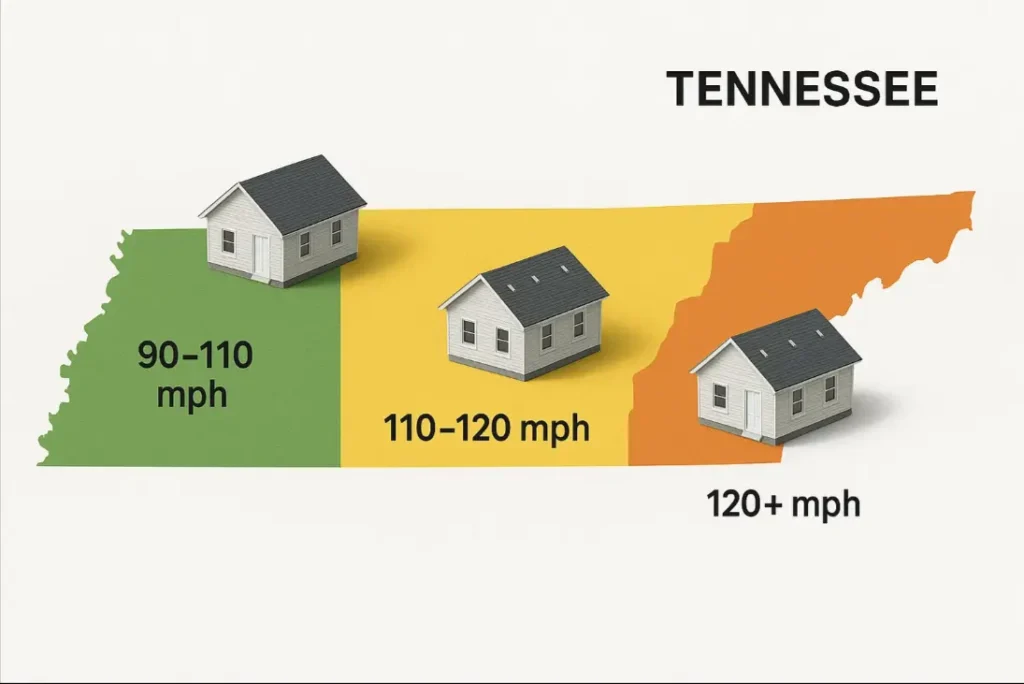
Understanding Wind Zones
Tennessee divides into wind zones based on risk:
Zone 1 (Lower Risk):
- Central Tennessee valleys
- 90-110 mph wind requirements
- Standard installation methods
Zone 2 (Moderate Risk):
- Western and eastern Tennessee
- 110-120 mph wind requirements
- Enhanced fastening patterns
Zone 3 (Higher Risk):
- Exposed hilltops and ridges
- 120+ mph wind requirements
- Specialized installation techniques
Check your property’s specific wind zone through your local building department. This determines the requirements for your residential roof repair or replacement.
Meeting Wind Requirements
Wind resistance comes from several factors:
Proper Fastening:
- Correct nail length and type
- Proper nail placement and quantity
- Adequate penetration into decking
Underlayment:
- Self-adhering membranes in vulnerable areas
- Proper overlap and sealing
- Wind-rated products
Edge Protection:
- Starter strip installation
- Drip edge requirements
- Enhanced fastening at edges and ridges
Material Selection:
- Wind-rated shingles or materials
- Manufacturer installation specifications
- Appropriate for local wind zone
Professional installation following these standards protects your home during severe weather events that Tennessee experiences regularly.
Roof Decking and Structural Requirements
The foundation of any quality roof starts with proper decking and structural support.
Decking Material Standards
Tennessee codes specify:
Minimum Thickness Requirements:
- 7/16″ OSB or plywood for 16″ rafter spacing
- 15/32″ OSB or plywood for 24″ rafter spacing
- Thicker requirements for certain climates
Material Quality:
- Proper grade ratings (typically CDX plywood or better)
- Moisture-resistant materials
- Proper fastening to rafters
Spacing and Support:
- Maximum spans based on material thickness
- Proper support at edges
- Stagger joints for strength
Quality contractors inspect and replace damaged decking before installing new roofing materials. This prevents future problems and ensures code compliance.
Structural Load Requirements
Your roof structure must support:
Dead Loads:
- Roofing material weight
- Decking and framing weight
- Equipment mounted on roof
Live Loads:
- Snow accumulation
- Maintenance worker access
- Temporary construction loads
Wind Uplift Loads:
- Negative pressure during high winds
- Suction forces at edges and corners
- Overall structural wind resistance
Structural modifications require engineering calculations and enhanced inspections. Projects involving solar panel installation often need structural verification.
Ventilation Standards: Critical for Roof Longevity
Proper attic ventilation isn’t optional—it’s required by code and essential for roof performance.
Why Ventilation Requirements Exist
Adequate ventilation prevents:
- Moisture accumulation causing rot and mold
- Ice dam formation in winter
- Excessive heat buildup shortening shingle life
- Structural damage from condensation
Tennessee’s humid climate makes ventilation especially critical.
Minimum Ventilation Requirements
Tennessee codes typically require:
Net Free Ventilation Area:
- 1 square foot per 150 square feet of attic space
- Can reduce to 1:300 with proper vapor barriers
- Balanced between intake and exhaust
Intake Ventilation:
- Soffit vents along roof edges
- Adequate for air to enter freely
- Protected from weather infiltration
Exhaust Ventilation:
- Ridge vents, roof vents, or gable vents
- Located near roof peak for heat escape
- Sized to balance intake volume
Common Ventilation Mistakes
Avoid these code violations:
- Blocking soffit vents with insulation
- Insufficient ventilation area for attic size
- Imbalanced intake/exhaust creating negative pressure
- Mixing ventilation types that fight each other
Professional contractors performing thorough roof inspections evaluate ventilation adequacy and recommend improvements.
Fire Rating Requirements
Fire safety codes protect your family and meet insurance requirements.
Understanding Fire Ratings
Roofing materials receive fire ratings:
Class A (Highest Protection):
- Asphalt shingles with fiberglass base
- Most metal roofing products
- Clay and concrete tiles
- Required in many Tennessee jurisdictions
Class B (Moderate Protection):
- Some wood shingles with treatment
- Certain composite materials
- Limited use in many areas
Class C (Basic Protection):
- Untreated wood shingles
- Some older materials
- Often prohibited in urban areas
Check your local requirements before selecting materials. Most areas require Class A for new installations.
Special Fire Considerations
Additional requirements may apply:
- Wildfire-prone areas need enhanced protection
- Urban interface zones have stricter standards
- Historical districts may have special allowances
- Commercial properties face additional requirements
Insurance companies often require Class A materials regardless of code minimums. Verify requirements before planning your metal roofing project.
Flashing and Water Protection Standards
Proper flashing prevents the most common source of roof leaks.
Critical Flashing Locations
Codes require proper flashing at:
Roof Penetrations:
- Chimneys require counter-flashing
- Plumbing vents need proper boots
- HVAC units require curb flashing
- Skylights need pan flashing systems
Roof Transitions:
- Valley flashing (open or closed)
- Wall/roof intersections
- Dormer connections
- Eave and rake edges
Vulnerable Areas:
- Ice and water shield at eaves
- Step flashing along walls
- Kick-out flashing at wall ends
- Headwall flashing above windows
Professional installation of flashing prevents leaks and ensures code compliance. Many emergency roof repairs result from improperly installed flashing.
Ice and Water Shield Requirements
Tennessee codes require self-adhering waterproof membranes:
Minimum Coverage:
- Extends from eave edge up at least 24″ inside exterior wall
- Enhanced coverage in colder regions
- Additional coverage in valleys
Application Standards:
- Proper surface preparation
- Correct overlap specifications
- Temperature limitations during installation
- Compatibility with roofing material
This protection proves especially important during Tennessee’s occasional ice storms and heavy snow events.
Material-Specific Code Requirements
Different roofing materials have unique code requirements.
Asphalt Shingle Requirements
Most common in Tennessee, asphalt shingles must meet:
Material Standards:
- Minimum weight ratings
- Wind resistance ratings
- Fire classification
- Manufacturer specifications
Installation Requirements:
- Proper fastener type and quantity
- Correct exposure and overlap
- Starter strip requirements
- Hip and ridge specifications
Metal Roofing Codes
Metal roofing systems have specific requirements:
Panel Standards:
- Minimum gauge specifications
- Proper slope requirements (typically 3:12 minimum)
- Fastening methods and spacing
- Thermal expansion allowances
Underlayment:
- Required underlayment type
- Proper installation methods
- Moisture barrier requirements
Flashing and Trim:
- Proper edge treatments
- Penetration flashing details
- Valley construction methods
Tile and Specialty Material Codes
Premium materials like tile require:
- Enhanced structural support for additional weight
- Proper batten installation for attachment
- Specialized underlayment requirements
- Wind-rated attachment systems
These projects often need engineering oversight and enhanced inspections.
| Material Type | Minimum Slope | Wind Rating | Fire Rating | Special Requirements |
|---|---|---|---|---|
| Asphalt Shingles | 2:12 | 110+ mph | Class A | Standard fastening |
| Metal Roofing | 3:12 | 120+ mph | Class A | Thermal expansion |
| Tile | 4:12 | Varies | Class A | Structural support |
| Flat/Low-Slope | 1/4:12 | 90+ mph | Class A | Special membranes |
The Inspection Process: What to Expect
Understanding inspections helps you prepare and avoid delays.
Pre-Construction Inspection
Before work begins:
- Permit verification at the site
- Material staging review
- Site safety assessment
- Property protection measures
Have your contractor post the permit card visibly and ensure all materials meet approved specifications.
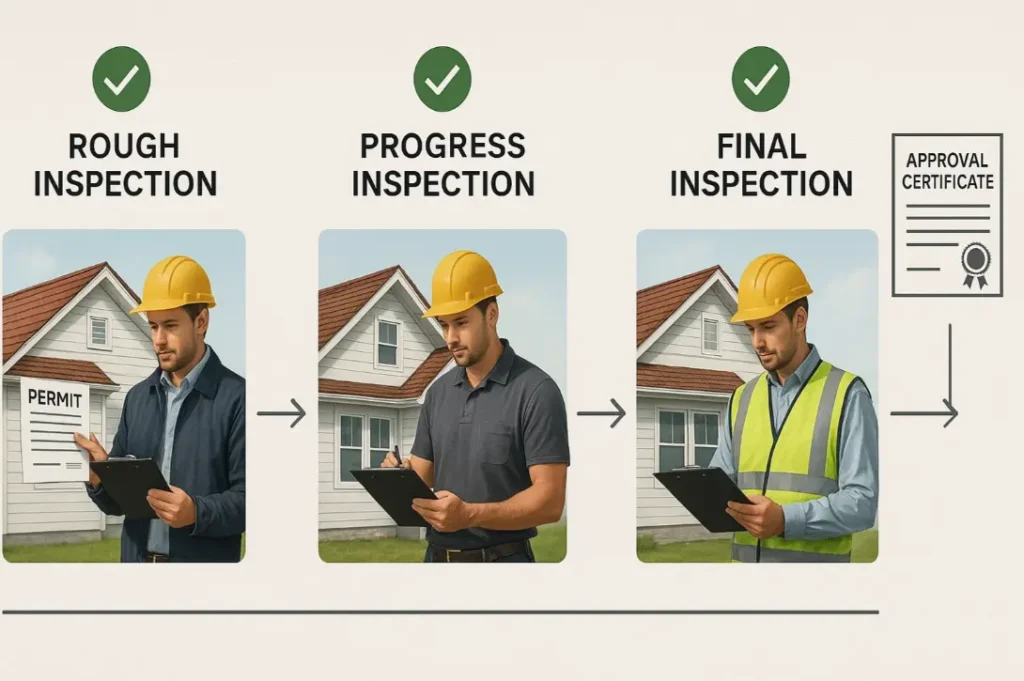
Rough Inspection
Conducted after tear-off and decking work:
Inspector Examines:
- Decking condition and attachment
- Structural modifications if any
- Proper fastening to rafters
- Replacement decking quality
Common Issues Found:
- Insufficient decking thickness
- Improper fastening
- Damaged rafters not replaced
- Missing required structural members
Address any deficiencies immediately before proceeding.
Progress Inspection
During installation, inspectors verify:
- Proper underlayment installation
- Flashing details at penetrations
- Valley construction methods
- Ice and water shield placement
Some jurisdictions require multiple progress inspections for complex projects.
Final Inspection
The last inspection before project approval:
Inspector Checks:
Overall installation quality
Code compliance throughout
Proper ventilation installation
Complete flashing details
Site cleanup completion
Required Documentation:
Manufacturer warranties
Material specifications
Disposal receipts
Contractor certification
Pass this inspection to receive your certificate of completion. Many Tennessee building codes are tied directly to who is allowed to perform roofing work. In many cases, homeowners are required to hire qualified professionals who understand and follow these regulations. This is why it’s important to know whether a roofing license is required in Tennessee before hiring a contractor or starting a roofing project.
Common Code Violations and How to Avoid Them
Learn from others’ mistakes to keep your project compliant.
Inadequate Fastening
The Problem:
- Too few nails per shingle
- Wrong nail length or type
- Improper nail placement
- Poor nail penetration
The Solution:
- Follow manufacturer specifications exactly
- Use proper pneumatic pressure settings
- Inspect fastening regularly during installation
- Hire experienced contractors who know requirements
Improper Flashing
The Problem:
- Missing step flashing at walls
- Inadequate valley flashing
- Poor penetration details
- No kick-out flashing
The Solution:
- Use proper flashing materials
- Follow code-compliant details
- Install before roofing material
- Ensure water sheds away from vulnerable areas
Ventilation Deficiencies
The Problem:
- Insufficient ventilation area
- Blocked soffit vents
- Imbalanced intake/exhaust
- Improper vent placement
The Solution:
- Calculate required ventilation accurately
- Keep insulation away from vents
- Balance intake and exhaust equally
- Position exhaust vents properly
Material Non-Compliance
The Problem:
- Using materials not approved for slope
- Wrong fire rating for area
- Insufficient wind resistance
- Improper material storage
The Solution:
- Select appropriate materials during planning
- Verify code compliance before purchasing
- Store materials properly on site
- Use materials within their rated capabilities
Energy Code Requirements
Recent code updates emphasize energy efficiency.
Insulation Standards
Tennessee energy codes require minimum insulation:
Attic Spaces:
- R-38 minimum in most Tennessee zones
- R-49 in colder regions
- Proper installation without compression
- Maintained ventilation clearances
Cathedral Ceilings:
- R-30 minimum with proper ventilation
- Alternative: spray foam systems
- Continuous insulation barriers
- Vapor retarder requirements
Radiant Barrier Options
While not always required, radiant barriers improve efficiency:
- Installed on bottom of roof decking
- Reduces summer heat gain
- Lowers cooling costs
- May qualify for energy credits
Cool Roof Requirements
Some jurisdictions incentivize or require:
- High solar reflectance materials
- Thermal emittance standards
- Cool color options for metal roofs
- Energy Star ratings
These requirements particularly apply to commercial roofing projects.
Working with Building Departments
Positive relationships with building officials streamline projects.
Before You Apply
Prepare by:
- Researching requirements thoroughly
- Gathering all documentation before applying
- Understanding local amendments
- Asking questions before submitting
Most building departments offer pre-application consultations. Use this service for complex projects.
During the Project
Maintain compliance by:
- Scheduling inspections in advance
- Being present during inspections when possible
- Addressing deficiencies immediately
- Maintaining communication with inspectors
Common Building Department Questions
Be prepared to answer:
- What materials are you using? Have specifications ready
- Who’s doing the work? Provide contractor license information
- When will you need inspections? Give realistic timelines
- Are there any structural changes? Have engineering documents if needed
Transparency and preparedness create positive working relationships.
Special Situations and Exceptions
Some projects face unique code challenges.
Historical Properties
Homes in historical districts may need:
- Historical commission approval
- Material restrictions matching original construction
- Specialized installation methods
- Documentation of historical accuracy
Work with contractors experienced in historical renovation.
HOA-Restricted Communities
Homeowners associations often add requirements:
- Specific color restrictions
- Material type limitations
- Architectural review board approval
- Enhanced aesthetic standards
Check HOA rules before selecting materials—they may be stricter than building codes.
Unusual Roof Designs
Complex designs need special attention:
- Flat or low-slope roofs under 2:12
- Curved or barrel roofs
- Green roof systems
- Integrated solar systems
These projects typically require engineering oversight and enhanced inspections.
Consequences of Non-Compliance
Understanding risks motivates proper code compliance.
Immediate Consequences
Non-compliant work creates:
- Failed inspections delaying project completion
- Stop work orders halting construction
- Correction costs for compliance fixes
- Extended project timelines
Long-Term Problems
Code violations cause:
- Insurance claim denials
- Manufacturer warranty voids
- Resale difficulties when selling
- Legal liability for injuries or damage
Financial Impact
Non-compliance costs include:
- Tear-off and replacement of non-compliant work
- Additional permit fees
- Extended contractor costs
- Potential fines from building departments
Proper compliance from the start saves money and headaches.
Choosing Code-Compliant Contractors
The right contractor makes code compliance easy.
What to Look For
Qualified contractors demonstrate:
Code Knowledge:
- Understanding of IRC and Tennessee amendments
- Familiarity with local requirements
- Current with code updates
- Proper interpretation of standards
Permit Experience:
- Regular permit applications
- Good relationships with building departments
- Clean inspection records
- Proper documentation practices
Installation Expertise:
- Follows manufacturer specifications
- Uses proper techniques and materials
- Maintains quality control
- Addresses issues proactively
At Daniel Hood Roofing, we pride ourselves on code-compliant installations that pass inspections the first time.
Questions to Ask Contractors
Verify code competency by asking:
“How familiar are you with Tennessee roofing codes?”
- Detailed answers show knowledge
- Vague responses raise concerns
“Have you worked in my jurisdiction before?”
- Local experience means smoother permitting
- New-to-area contractors may face learning curves
“What’s your inspection pass rate?”
- High pass rates indicate quality work
- Multiple failures suggest problems
“Who handles permit applications and inspections?”
- Contractors should manage this process
- Homeowner responsibility signals inexperience
Red Flags to Avoid
Watch for warning signs:
- Suggesting you skip permits
- Claiming codes don’t apply
- No experience with local building department
- Can’t explain code requirements
- History of failed inspections
These signs indicate contractors who cut corners and create future problems.
Resources for Code Information
Access these resources for specific code questions:
Official Sources
International Code Council (ICC):
- Publishes the IRC
- Offers code books and resources
- Provides training and certification
Tennessee Department of Commerce & Insurance:
- State code adoptions and amendments
- Licensing board information
- Consumer protection resources
Local Building Departments:
- Municipality-specific requirements
- Permit applications and fees
- Inspection scheduling
- Local amendments and interpretations
Professional Organizations
Industry groups provide guidance:
Tennessee Roofing Contractors Association
National Roofing Contractors Association
Manufacturer technical support
Professional contractor associations
Beyond state and local codes, many professional roofers also follow industry standards set by trusted organizations. Groups such as the Tennessee Roofing Contractors Association help promote ethical practices, proper installation methods, and ongoing education to ensure roofing work meets both safety and quality expectations.
Online Resources
Helpful websites include:
- Building department websites
- Code reference sites
- Manufacturer installation guides
- Professional association resources
Your Action Plan for Code-Compliant Roofing
Ready to start your roofing project? Follow these steps:
Step 1: Research Your Local Requirements
- Contact your building department
- Understand permit requirements
- Identify specific local amendments
- Note any special restrictions (HOA, historical, etc.)
Step 2: Select Qualified Contractors
- Interview multiple contractors
- Verify code knowledge
- Check inspection history
- Review past projects
Step 3: Plan for Compliance
- Choose code-approved materials
- Understand inspection schedule
- Budget for permit fees
- Allow time for reviews and inspections
Step 4: Monitor the Process
- Verify permit posting
- Attend inspections when possible
- Address deficiencies promptly
- Maintain documentation
Step 5: Complete Final Requirements
- Pass final inspection
- Obtain completion certificate
- File warranty documents
- Keep all records for future reference
Whether you need emergency repairs, routine maintenance, or complete replacement, code-compliant work protects your investment and your family.
Share your project details to receive code-compliant roofing solutions delivered with proven expertise and transparent service.