


Introduction
Metal roofing is one of the most durable systems used in Tennessee homes—but like any roofing material, it still needs proper maintenance and the right repair products to prevent leaks, rusting, and storm-related damage. Whether you have standing seam, through-fastened metal roofing, or a specialty metal system, having the correct materials on hand can make repairs faster, easier, and more long-lasting.
This roundup blog highlights the most effective metal roofing repair products homeowners can use for small fixes, seam sealing, patching holes, and preventing leaks. We also included insights from Daniel Hood Roofing Systems, who regularly handles residential and commercial metal roof repairs across Tennessee. If you want to maintain your roof’s durability—or avoid expensive replacements—this guide gives you homeowner-friendly options.
You’ll also see helpful internal resources like metal roofing repair secrets, essential repair tools, weather-preparedness guides, and inspection tips so you stay informed and ready.
1. Inspect Your Roof Regularly to Catch Problems Early
Sealants are the #1 go-to solution for small metal roof leaks. They’re flexible, weather-resistant, and designed to handle Tennessee’s temperature swings.
Top Sealant Types for Metal Roofs
- Polyurethane sealants — great for metal-to-metal connection points
- Butyl rubber sealants — ideal for seams and fasteners
- Elastomeric sealants — flexible and long-lasting, perfect for hot summers
Check out this guide for a full list of recommended tools every homeowner should have on hand:
Essential Roofing Repair Tools
Learn about the must-have tools for basic roof maintenance, quick fixes, and safe DIY repairs. This guide explains what each tool is used for and why it’s important, making it easier to handle small roofing issues before they turn into major problems.
Best Uses of Each Sealant Type
| Sealant Type | Best For | Durability | Notes |
|---|---|---|---|
| Polyurethane | Penetrations & joints | High | Strong adhesion |
| Butyl Rubber | Seams & fasteners | Very High | Great for metal laps |
| Elastomeric | Wide cracks & UV exposure | Very High | Best for top-coating |
2. Metal Roof Patching Kits (Best for Holes or Rust Spots)
Patching kits are ideal for repairing small to medium-sized roof issues such as minor holes, rust spots, or worn metal panels. They’re designed for quick, straightforward fixes that help prevent leaks and stop damage from spreading, making them a handy option for DIY-minded homeowners. However, when repairs become frequent or damage is widespread, a full residential roof replacement is often the more reliable long-term solution for protecting your home.
What to Look For in a Good Patch Kit
Weatherproof membrane
Choose a kit with a durable, fully weatherproof membrane that can withstand heavy rain, wind, and changing temperatures. This helps ensure long-lasting protection once the patch is applied.
Adhesive backing
Look for a strong, pre-applied adhesive backing so the patch bonds securely to metal, shingles, or roofing membranes. A good adhesive makes installation easier and prevents future lifting.
Strong aluminum or rubberized material
Select kits made from reinforced aluminum or high-quality rubberized material. These materials create a rigid, reliable seal and work well for covering cracks, rusted areas, and worn-out panels.
UV and heat resistance
A good patch kit should handle intense sunlight and high heat without breaking down. UV-resistant materials prevent the patch from cracking, peeling, or losing adhesion over time.
These solutions work especially well for homes hit by storm debris—something Tennessee homeowners deal with often after strong winds or severe weather. Using the right repair methods can help prevent leaks, rust, and long-term roof damage.
For deeper, metal-specific guidance, you can explore this detailed resource:
3. Waterproof Roof Coatings (Best for Aging Metal Roofs)
If your metal roof is aging or showing signs of widespread wear, applying a protective coating system can significantly extend its lifespan. Coatings not only shield against leaks and corrosion but can also improve energy efficiency and reduce maintenance costs over time.
Types of Coatings
Acrylic coatings — Excellent for UV protection and general weather resistance, keeping your roof cooler and preventing sun-related damage.
Silicone coatings — Perfect for areas prone to ponding water, as they remain flexible and resist water accumulation without cracking.
Polyurethane coatings — Highly durable and impact-resistant, ideal for roofs exposed to hail, falling debris, or heavy foot traffic.
Using the right coating system allows homeowners to delay costly roof replacement while maintaining a safe, reliable roof for years to come.
4. Repair Tapes for Fasteners & Seams
Roofing tapes are excellent solutions for temporary and mid-term fixes on your roof. They can seal leaks, prevent water intrusion, and protect areas that need repair until a more permanent solution is installed. While they aren’t a long-term replacement for professional roofing repairs, using the right type of tape can extend the life of your roof and prevent further damage. Roofing tapes are especially useful for patching small leaks around flashing, vents, skylights, and seams.
Best Tape Types
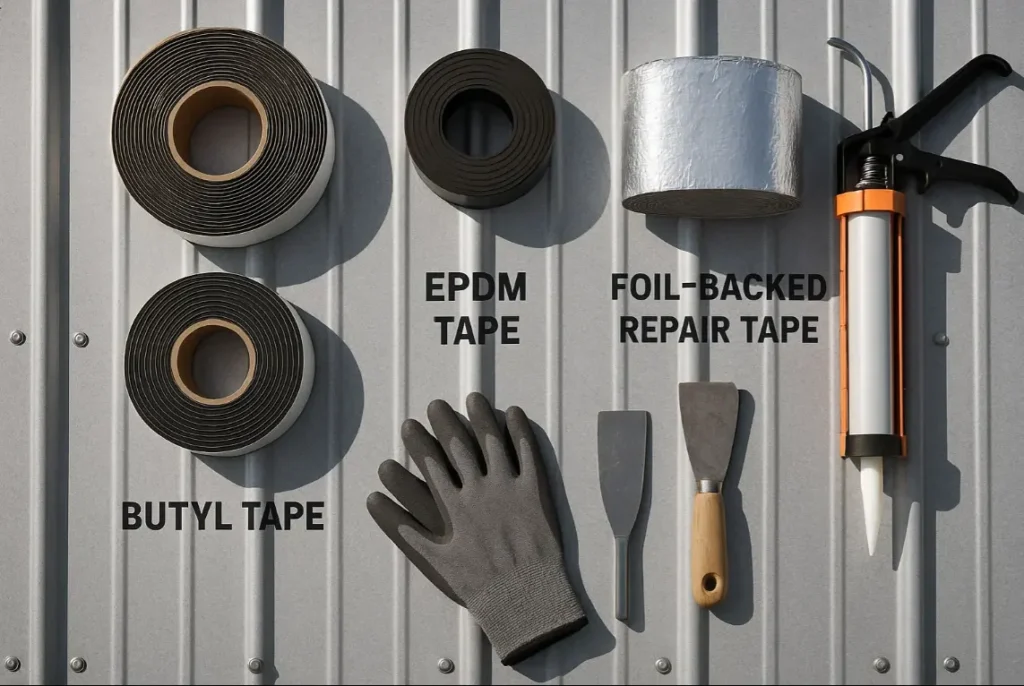
Butyl Tape — Butyl tape is a versatile option that forms airtight and watertight seals. It sticks well to metal, asphalt, and other roofing materials, making it a reliable choice for quick repairs. Its adhesive properties remain strong even in cold weather, and it can help prevent moisture from seeping under the roofing material.
EPDM Tape — EPDM tape is known for its high flexibility and durability. It can stretch to cover uneven surfaces and maintain its seal over time, even in areas with temperature fluctuations. This makes it ideal for sealing around roof penetrations, joints, and irregular shapes.
Foil-Backed Repair Tape — Foil-backed tapes are designed for hot climates because they reflect sunlight and resist heat. They are particularly effective for metal roofing and other surfaces exposed to direct sunlight. This type of tape not only seals leaks but also helps prevent the material underneath from overheating or degrading.
For more information about your roofing options and related systems, check these links:
Standing Seam Metal Roofing
Through-Fastened Metal Roofing
5. When to Call a Professional
Even the best roofing products and repair tapes have their limits. While they can temporarily fix small leaks or damaged areas, some issues require professional attention to ensure your roof remains safe and functional.
Call a Pro If:
You Have Widespread Rust — Rust can weaken metal panels over time, leading to leaks or even structural failure. If corrosion is extensive, a professional assessment is necessary to determine whether repairs or replacement are needed.
Panels Are Pulling Away — Metal panels that are loosening from their fasteners can compromise the roof’s integrity. This can allow water to seep underneath and cause further damage. A contractor can secure panels properly or replace damaged sections.
You See Structural Movement — Any visible shifts in your roof structure, sagging, or unusual gaps can signal serious underlying problems. Professional evaluation is crucial to prevent costly damage or safety hazards.
Leaks Keep Returning — Persistent leaks often indicate more than a surface-level problem. Repeated DIY fixes may not address the root cause, so calling an experienced roof repair contractor ensures a long-lasting solution.
For trusted help in Tennessee, check out:
Tennessee Roof Repair Contractors
Get your free, no-obligation roof inspection
Fastest service
Call 865-851-5002Talk to our scheduler and book your free inspection in one call. Monday – Sunday, 8 AM – 8 PM.
- Free, no-obligation inspection
- A written, itemized estimate before any work begins
- Licensed and insured, family owned for 15+ years
Prefer we call you?
Request your free, no-obligation estimate and we will call to schedule.