


Introduction
Your roof protects your entire home, so even a small leak can quickly turn into a major issue if ignored. Tennessee’s weather—heavy rain, strong winds, and sudden temperature changes—makes regular roof checks even more important. As a homeowner, understanding basic roofing repair tips can help you prevent structural damage, mold growth, and expensive fixes down the road.
This guide breaks down easy, practical, and homeowner-friendly tips you can follow to keep your roof in good shape. You’ll learn how to spot early warning signs, use essential repair tools, choose effective repair products, and know when it’s time to call experts like Daniel Hood Roofing Systems for help. We also added quick lists, tables, and step-by-step guidance so you never feel lost or overwhelmed.
If you’ve ever wondered whether that shingle crack matters, how often you should inspect your roof, or what to do after a storm—this blog covers everything you need. You’ll also find relevant resources such as thorough roof inspections, emergency repair services, roof cleaning options, and metal or single-ply repair guides to help you take action fast.
Let’s start with the most important DIY-friendly repair tips every Tennessee homeowner should know.
1. Inspect Your Roof Regularly to Catch Problems Early
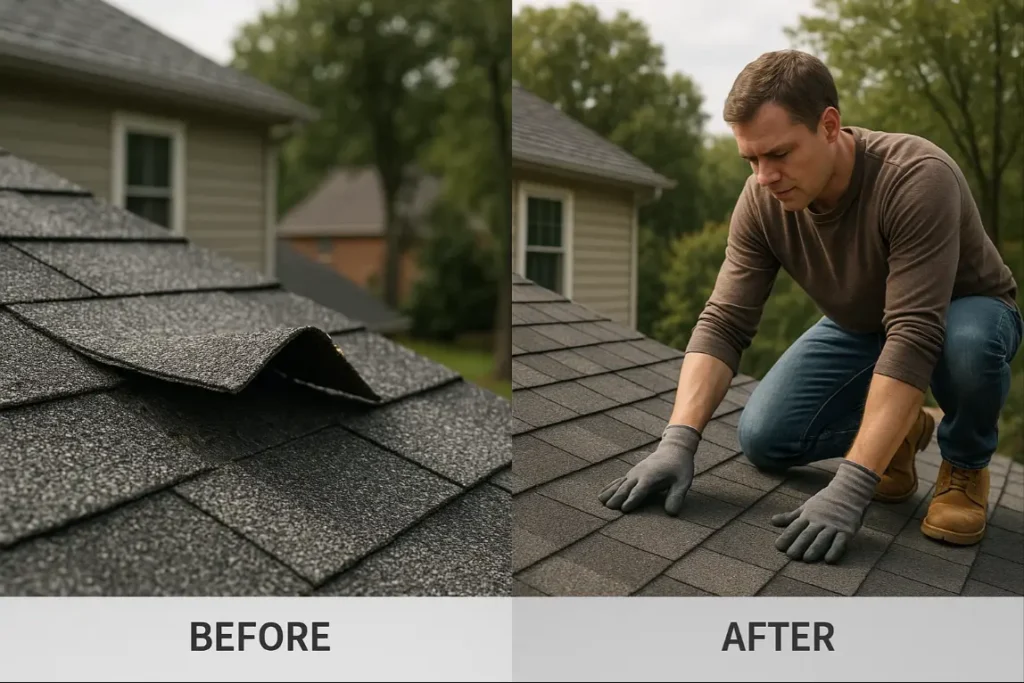
Regular roof inspections are your first line of defense. Many roofing issues start small—like loose shingles or minor flashing gaps—but quickly turn severe when left unnoticed. Tennessee’s storms and seasonal changes make consistent inspections essential for every homeowner.
What to Look For During a Basic Roof Check
- Missing or lifted shingles — may lead to leaks during heavy rain.
- Granule loss — often found in gutters; a sign of shingle aging.
- Damaged flashing — especially around chimneys, skylights, and vents.
- Soft or sagging spots — signals moisture damage under the surface.
- Debris buildup — which traps moisture and causes rot.
Common Roof Issues & What They Mean
| Roof Issue | What It Indicates | Action to Take |
|---|---|---|
| Missing shingles | Wind/storm damage | Replace ASAP |
| Curling shingles | Age or heat exposure | Consider repair or replacement |
| Leaks around flashing | Sealant failure | Reseal or replace flashing |
| Moss or algae | Moisture buildup | Schedule roof cleaning |
| Soft decking | Structural moisture | Call a professional immediately |
For a more detailed walkthrough of what to check and how to spot hidden issues, you can explore this helpful guide: Thorough Roof Inspection Services. It covers step-by-step inspection tips, common warning signs, and when to call a professional for a full evaluation.
2. Use the Right Tools and Repair Products
Repairs become easier—and safer—when you have the right tools and materials. Homeowners often attempt small fixes using the wrong sealants or adhesives, which usually leads to repeat problems.
Check out this full guide to essential tools:
Essential Roofing Repair Tools Every Homeowner Should Know
Must-Have Basic Roofing Tools
- Roofing hammer
- Utility knife
- Caulking gun
- Roofing sealant
- Replacement shingles
- Ladder with stabilizer
Best Repair Products for Quick Fixes
These product types work well for common Tennessee roofing issues:
- Elastomeric sealants — ideal for small cracks or flashing leaks.
- Roof patches — good for isolated shingle damage.
- Roofing cement — used for sealing edges and small openings.
You can also explore more recommendations here:
Roofing Repair Products That Actually Work
3. Clear Debris and Keep Your Roof Clean
Debris is one of the biggest silent threats to residential roofs. Leaves, branches, dirt, and even bird nests trap moisture, weaken shingles, and cause leaks.
Regular cleaning not only extends your roof’s lifespan but also improves appearance and reduces storm-related damage.
Why Roof Cleaning Matters
- Prevents moisture buildup that leads to mold and wood rot
- Protects shingle granules from premature wear
- Helps water flow properly toward gutters
- Avoids pest nests that create entry points
If you prefer professional cleaning, check this service:
Roof Cleaning Services
How Often to Clean Roof Areas
| Area | Cleaning Frequency | Notes |
|---|---|---|
| Roof Surface | Every 6–12 months | More often if surrounded by trees |
| Gutters | Every 3–6 months | Prevent clogging and overflow |
| Valleys | Twice a year | High debris collection areas |
| Downspouts | Annually | Ensure proper drainage |
4. Address Small Repairs Immediately
The biggest mistake homeowners make is delaying small repairs. A loose shingle today can become a roof leak tomorrow. A tiny flashing gap can escalate into major interior damage.
Quick Repairs You Can Do Immediately
- Replace one or two damaged shingles
- Apply roofing cement over minor cracks
- Seal exposed nail heads
- Clear blocked gutters to stop water backup
For Tennessee homeowners looking for reliable roofing help, start with these trusted services:
Roofing Contractor for Roof Repair — Get professional assistance for leaks, storm damage, or aging shingles.
Residential Roof Repair — Perfect for routine maintenance, minor fixes, and keeping your home protected year-round.
5. Know When to Call a Professional Roofer
DIY repairs can only go so far. Certain issues—like structural damage, large leaks, flashing failure, or storm impact—need expert attention.
Signs You Need an Expert
- Leak that keeps returning
- Storm or wind damage
- Sagging roof sections
- Mold or moisture inside attic
- Widespread shingle loss
Check these expert services to guide you with any roofing concerns:
Tennessee Roof Repair Contractors — Trusted professionals who handle leaks, storm damage, and all types of roofing issues across Tennessee.
Emergency Roof Repair — Fast-response service for sudden damage, severe leaks, or urgent situations that need immediate attention.
Also helpful for homeowners:
Blog: Roof Inspection Signs — Learn the key warning signs that your roof needs attention and how to spot problems early.
Helpful Additional Resources for Homeowners
These guides may help you find the right solution depending on your roof type or the issue you’re dealing with:
Torch Down Roofing Repair — Best for flat or low-slope roofs; learn how to handle common leaks and membrane problems.
Standing Seam Metal Roofing — Ideal if you have a modern metal roof system; understand maintenance needs and repair options.
Through-Fastened Metal Roofing — Covers issues like loose screws, panel shifting, and weather-related wear on traditional metal roofs.
Solar Panel Roof Repair — Helpful for homeowners with rooftop solar systems needing safe, specialized repair guidance.
Rubber Roofing Repair Kit — Great for quick fixes on EPDM or other rubber-based roofing materials.
Soffit Repair Contractors — For ventilation issues, rotted soffits, or storm damage around the roofline.
Single-Ply Roofing Contractors — Perfect for TPO, PVC, or EPDM roofs needing expert leak repair or membrane replacement.
Conclusion
Taking care of your roof doesn’t have to be overwhelming. With regular inspections, proper tools, good maintenance habits, and quick action on small issues, you can extend your roof’s lifespan and avoid expensive repairs. Tennessee homes face unique weather conditions, so staying proactive is the best protection against leaks, storm damage, and structural problems.
When you need help beyond simple repairs, Daniel Hood Roofing Systems is always ready with expert solutions—from inspections and emergency repairs to specialized roofing systems. With the right knowledge and professional support, you can keep your home safe, sturdy, and protected year-round.
Get your free, no-obligation roof inspection
Fastest service
Call 865-851-5002Talk to our scheduler and book your free inspection in one call. Monday – Sunday, 8 AM – 8 PM.
- Free, no-obligation inspection
- A written, itemized estimate before any work begins
- Licensed and insured, family owned for 15+ years
Prefer we call you?
Request your free, no-obligation estimate and we will call to schedule.